
Non-resident individuals (NRIs) have also been allowed to apply for the niche banking licence, provided they plan to return to India.

From the Sensex pack, State Bank of India, ICICI Bank, IndusInd Bank, Axis Bank, Kotak Mahindra Bank, HDFC Bank, Reliance Industries were among the major laggards. Bucking the trend, auto stocks Tata Motors and Mahindra & Mahindra closed with gains.

As you ring in the New Year, here's a list of the 10 most important financial resolutions to get your money train back on track.

Akruti City, Omaxe, Sobha Developers, among other property developers, are pledging shares with lenders to provide additional security, apart from hypothecating properties to borrow funds, according to information submitted to the stock exchanges. Promoters of Akruti, Omaxe and Sobha have pledged their shares with Indiabulls Financial Services, financiers like Dubai-based BankSarasin & Co and Credit Suisse as a liquid security for loans against properties.

'We need to be far more careful given the fact that while this is group lending, it's essentially unsecured.'

A leave vote means the future of Britain's financial services industry is now hanging in the balance.

Priyadarshini Maji evaluates the impact that payment banks are likely to have on your financial life.
The insurance company has formed a four-member committee headed by LIC chairman TS Vijayan to decide the valuation of LIC Mutual Fund.

'The race is now on for Indian IT firms to develop their AI prowess and focus on a software-first approach to services as the people element becomes more complicated with Trump's expected new regulations.'

While the capital spending is being maintained at 3.1 per cent of the GDP, a little more would have boosted economic growth even further, suggests Rajiv Memani.

Commemorating 75 years of India's independence, SBI has launched a 75-day Utsav Deposit Scheme, offering 6.10 per cent for fixed deposits. Senior citizens will get an additional 0.50 per cent and the offer is on until October 30, SBI said.

'Maharashtra is virtually in a debt trap.'

Foreign Portfolio Investors (FPIs) selling spree continued as they dumped Indian equity worth over Rs 5,800 crore this month so far on rising interest rates and geopolitical tensions in the Middle East. This came after such investors withdrew Rs 24,548 crore in October and Rs 14,767 crore in September, data with the depositories showed. Before the outflow, FPIs were incessantly buying Indian equities in the last six months from March to August and brought in Rs 1.74 lakh crore during the period.

Vodafone Idea's (Vi's) subscriber loss reduced to a seven-month low in March, and alongside the company added 1.1 million broadband users after two months of net loss -- two things analysts have noted as key trends that need to be monitored. While Vi has been losing customers for more than two and a half years now, the churn reduced to below a million after five straight months in March, the Telecom Regulatory Authority of India (Trai) data has shown. "Jio's softer than usual subscriber growth in March, and VIL's slowing subscriber market share loss are key trends to keep an eye on going forward," global investment banking and financial services major UBS said in an analyst note.

Ask rediffGURU and PF expert Milind Vadjikar your insurance, stocks, mutual fund and personal finance-related questions.

Benchmark equity indices Sensex and Nifty rebounded from early lows to settle higher on Wednesday following buying in Reliance Industries, Larsen & Toubro and ITC and positive trends in Asian and European markets. The 30-share BSE Sensex rose by 173.22 points or 0.26 per cent to settle at 66,118.69. The index opened lower and fell further to a low of 65,549.96 in morning trade.

Retirement fund body EPFO recorded a net addition of 19.94 lakh members in July this year, the labour ministry said on Monday. Union Labour Minister Mansukh Mandaviya said at a press conference that 10.52 lakh new or first-time workers subscribed to social security schemes run by Employees' Provident Fund Organisation (EPFO). The minister said almost 20 lakh net new members addition (19.94 lakh) was recorded in July this year.

Fundraising through the issuance of shares to qualified institutional investors has seen hectic activity in the first half of the current fiscal year (FY24), with 20 companies mobilising over Rs 18,400 crore, more than four-fold from the year-ago period, on positive investors' sentiments. Moreover, the robust trend of Qualified Institutional Placements (QIPs) in the first half of the fiscal year 2023-24 is expected to persist throughout the second half of the year too, Sanjay Moorjani, Research Analyst at SAMCO Securities, told PTI. Prashant Rao, director and head of equity capital markets, Anand Rathi Investment Banking, said that market and investor sentiments play an important role for these issuances.

'There will be 200 ITIs developed as hubs, while 800 will be developed as spoke, connected with five National Skill Training Institutes.'

The possibility of the slowdown affecting more players is greater if the industry doesn't get access to easier finance in the next six to eight months.

Strategic deals like the one involving the HDFC twins accounted for a bulk $126 billion of the overall quantum, while transactions involving private equity funds stood at $37 billion, the report by Deloitte, a consultancy firm, said. Despite global headwinds like rising interest rates and elevated inflation levels leading to increased margin pressures for companies, the firm expects the overall activity to remain "strong" in the ongoing 2023.

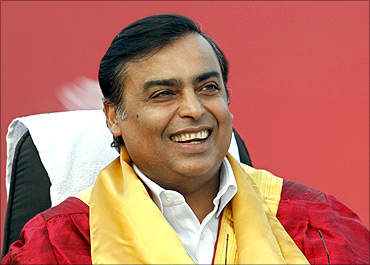
'If the RBI blesses us with a banking licence, we would like to launch a successful bank.'

Ajay Banga was on Wednesday appointed the next president of the World Bank, becoming the first-ever Indian-American to head the global financial institution which said it looks forward to working with him at a time when it's tackling the toughest development challenges facing developing countries. "The executive directors of the World Bank today selected Ajay Banga as president of the World Bank for a five-year term beginning June 2, 2023," the bank said in a press statement. In February, President Joe Biden announced that the US would be nominating Banga, 63, to lead the World Bank because he is "well equipped" to lead the global institution at "this critical moment in history."

It will be the second Budget of the Modi 3.0 government and eighth straight Budget for Nirmala Sitharaman, rare in Indian polity.

'Comparing the rates of interest with PSU banks, the three- and five-year time deposit rates of the post office are more favourable.'

It said banks' asset quality will deteriorate across the corporate, small and medium enterprises and retail segments, leading to pressure on profitability and capital.

Norms governing investments by provident funds bar these from depositing funds in a commercial bank in case the NPAs of that bank exceed two per cent of net advances.

Despite strong AUM growth, MFs lag behind other popular investment avenues. MFs received only 6 per cent of total household savings in 2021-2022.
Payments banks will mainly deal in remittance services and accept deposits of up to Rs 1 lakh.

After withdrawing record funds in 2021-22, foreign portfolio investors (FPIs) continued their sell-off in the last fiscal too and pulled out Rs 37,631 crore from Indian equities amid aggressive rate hikes by central banks globally. The outflow trend is likely to reverse in the current financial year since India has the best growth potential in the financial year 2023-24 (FY24), VK Vijayakumar, chief investment strategist at Geojit Financial Services, said. Market analysts believe that FPI flows in the current financial year would be decided by a host of factors, such as the US Federal Reserve's policy stance, oil prices movement and development in the geopolitical situation.

In the new decade, the scene will change because the banks till recently had been challenged by the fintechs, but the techfins have now entered the arena, observes Tamal Bandyopadhyay.

Funds raised by banks through certificates of deposit in December clocked the highest in the financial year 2023-24 as liquidity remained tight in the system with the Reserve Bank of India (RBI) infusing Rs 2.01 trillion on Monday, the highest in the current financial year. The liquidity deficit in the banking system widened to more than Rs 2 trillion on Monday on the back of advance tax outflows, market participants said. Around Rs 4 trillion worth of outflows are expected because of advanced tax and goods and services tax (GST) payments in December.

The Reserve Bank on Monday superseded the boards of Srei Infrastructure Finance as well as Srei Equipment Finance, citing concerns over governance and payment defaults, and decided to refer the two NBFCs for resolution under the insolvency law. This is only the second time in as many years that the Reserve Bank of India (RBI) is referring entities for the resolution process under the Insolvency and Bankruptcy Code (IBC) after taking first ever such step in the case of DHFL back in 2019. Superseding the boards of the crisis-hit Srei Infrastructure Finance Limited (SIFL) and Srei Equipment Finance Limited (SEFL), the RBI has appointed Rajneesh Sharma, former Chief General Manager of Bank of Baroda as the administrator to manage the affairs of the two companies.

The US Federal Reserve's interest rate decision, quarterly earnings of corporates and domestic macroeconomic data will influence trading in the equity market in a holiday-shortened week ahead, analysts said. Foreign funds' trading activity, monthly automobile sales data and global trends would also guide market movement this week, they added. Markets would remain closed on Monday on account of 'Maharashtra Day'.

The home loan top-up, a kind of secured multipurpose personal loan, is on the regulator's radar, points out Tamal Bandyopadhyay.

Capital infusion seen necessary for banks to maintain regulatory norms at the time of paying interest towards AT-1 bonds

Benchmark stock indices Sensex and Nifty fell for the third day running on Friday due to weak trends in global markets and soaring crude oil prices. Foreign fund outflows also weighed on investor sentiments amid strengthening US bond yields which are nearing 5 per cent for the first time since 2007. The 30-share BSE Sensex fell 231.62 points or 0.35 per cent to settle at 65,397.62.

Low home loan rates by banks could put large players in an advantageous position over smaller non-bank players, believe analysts.

The liquidity in the banking system could ease in the coming week due to an increase in government spending - a development that would be the key for the Reserve Bank of India (RBI) to decide whether to extend the incremental cash reserve ratio (I-CRR) mandate for banks. There are signs of improvement in the liquidity scenario as banks parked Rs 25, 833 crore with the RBI on Thursday. Market participants expect liquidity to gradually improve by the end of the month or during the first week of September, aided by government spending.

Only a fifth of foreign portfolio investors (FPIs) in breach of the market regulator-specified thresholds may need to provide enhanced disclosure on ultimate beneficiaries, thanks to exemptions being provided, according to people in the know. The ultimate beneficial ownership (UBO) disclosures, for FPIs with over 50 per cent holding in a single corporate group or over Rs 25,000 crore exposure to Indian assets, will be required from February 1. But, depending on their category, FPIs will have 10-30 working days to submit these granular details.
